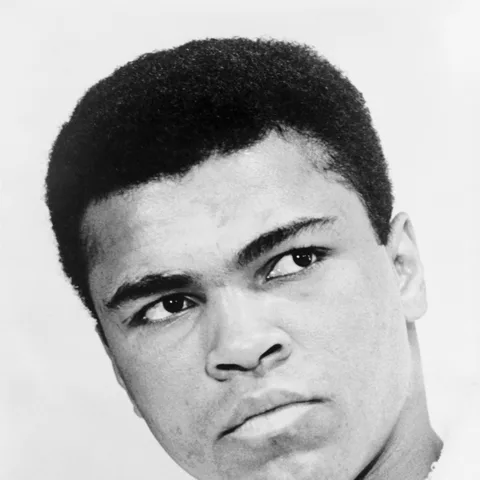
Muhammad Ali was an American boxer regarded as one of the greatest heavyweights in history and one of the most significant sporting figures of the twentieth century, a three-time world heavyweight champion famous as much for his beliefs and personality as for his boxing. His Olympic gold medal, his fights against the era's leading heavyweights and his stand on social and political issues made him a global icon.
Early life as Cassius Clay
Muhammad Ali was born Cassius Marcellus Clay Jr on 17 January 1942 in Louisville, Kentucky. He took up boxing as a boy, reportedly after his bicycle was stolen and a local police officer who trained boxers encouraged him to learn to fight.
He rose quickly through the amateur ranks and won a gold medal in the light heavyweight division at the 1960 Rome Olympics. Turning professional soon afterwards, he built a record of victories and attracted attention with his speed, his unusual style for a heavyweight, and his confident, rhyming self-promotion.
Rise and first world title
In 1964 Clay challenged the formidable champion Sonny Liston and won the world heavyweight title in a major upset. Shortly after the fight he announced that he had joined the Nation of Islam and changed his name to Muhammad Ali, a decision that drew controversy and reshaped his public identity.
Ali defended his title several times in the mid-1960s. His refusal to be drafted into the United States military during the Vietnam War, on religious and conscientious grounds, led to his being stripped of his title and barred from boxing for several years at the peak of his abilities, before the legal case was ultimately resolved in his favour.
The years away from the ring cost him a period that would otherwise have been the prime of his career. When he returned, the heavyweight division had moved on, and he had to re-establish himself against a new generation of dangerous opponents rather than simply resuming where he had left off, which gives his later achievements added weight.
Peak achievements and famous fights
After his return to the ring, Ali was involved in some of the most famous bouts in boxing history. He suffered a defeat to Joe Frazier in their first meeting, often billed as the "Fight of the Century", before later avenging it. He regained the world heavyweight title by defeating George Foreman in the 1974 bout in Zaire known as the "Rumble in the Jungle", using a tactical approach widely remembered as the "rope-a-dope".
His trilogy with Frazier concluded with the brutal "Thrilla in Manila". Across his career he became the first man to win the world heavyweight championship three times, a mark of his durability and skill across more than a decade at the top.
- 1960 Olympic gold medal in the light heavyweight division
- Three-time world heavyweight champion
- Defeated Sonny Liston, George Foreman and Joe Frazier among others
- "Rumble in the Jungle" win over George Foreman (1974)
- Famed trilogy of fights with Joe Frazier
Style and beliefs
Ali boxed with unusual speed, footwork and reflexes for a heavyweight, often keeping his hands low and relying on movement to evade punches, an approach captured in his famous line about floating and stinging. As he aged he relied more on toughness and ring intelligence, absorbing punishment to wear down opponents.
Beyond the ring he was an outspoken figure on race, religion and the Vietnam War, and his willingness to sacrifice his career for his principles made him a symbol well beyond sport. His charisma, wit and verbal showmanship also helped redefine how athletes engaged with the public and the media, turning pre-fight press conferences and interviews into events in their own right.
He was a heavyweight who moved like a much smaller fighter, and his ability to combine that mobility with genuine punching power was unusual for his size. Trainers and analysts long debated how he managed to slip punches that would have landed on most boxers, and his timing and ring awareness were as important to his success as his physical gifts.
Later life and legacy
Ali retired from boxing in the early 1980s. He was later diagnosed with Parkinson's disease, and in his final decades he devoted much energy to humanitarian and charitable work, becoming a widely respected global ambassador. A memorable moment of this later period was his lighting of the cauldron at the 1996 Atlanta Olympics.
He died on 3 June 2016. His legacy combines athletic greatness with cultural and moral significance, and he is frequently named among the most important and influential athletes of all time, in the company of figures such as Pele and other transcendent sporting icons.
Frequently Asked Questions
How many times was Muhammad Ali world heavyweight champion?
He was the first boxer to win the world heavyweight championship three times, across a career that spanned more than a decade at the top.
What was Muhammad Ali's birth name?
He was born Cassius Marcellus Clay Jr on 17 January 1942 in Louisville, Kentucky, and changed his name to Muhammad Ali in 1964.
Why was Muhammad Ali stripped of his title?
He refused to be drafted into the United States military during the Vietnam War on religious and conscientious grounds, which led to him being stripped of his title and barred from boxing for several years.
What was the Rumble in the Jungle?
It was Ali's 1974 fight against George Foreman in Zaire, in which he regained the world heavyweight title using a tactical approach remembered as the "rope-a-dope".
Did Muhammad Ali win an Olympic medal?
Yes. He won a gold medal in the light heavyweight division at the 1960 Rome Olympics, as an amateur named Cassius Clay.
Who were Muhammad Ali's biggest rivals?
His most famous rivals included Joe Frazier, with whom he fought a celebrated trilogy, as well as Sonny Liston and George Foreman.
When did Muhammad Ali die?
He died on 3 June 2016, having lived for many years with Parkinson's disease while working as a humanitarian ambassador.